
Study Trip - Protena Food, Malmö, June 11-12, Sweden
The study trip was organized in conjunction with the 6th AquaLoop partner meeting in Malmö, Sweden. Around 20 participants from various sectors, all connected through the AquaLoop project, took part in the visit on 11 June 2026. The programme was jointly organized by Gardfisk, an AquaLoop partner, and Protena Food.
Protena Food is a newly established food production company specializing in ready-to-eat products such as meatballs, burgers, and nuggets. To minimize the environmental footprint of its products while maintaining consumer expectations regarding taste and quality, the company aims to partially replace animal proteins with plant-based proteins and dietary fibers, primarily derived from legumes. In addition, Protena Food seeks to incorporate more sustainable sources of animal protein, including African catfish, which creates a strong link to Gardfisk and its innovative aquaculture approach.
The study visit provided participants with valuable insights into sustainable food production and innovative approaches to combining aquaculture and plant-based ingredients. It also fostered knowledge exchange and strengthened collaboration among stakeholders from different sectors involved in the AquaLoop project.
More information is available at the following link: 6th AquaLoop Partner Meeting in Malmö, Sweden – Aqualoop
Study Trip - Iceland
Study Trip - AWI Bremerhaven, February 25-26, Germany
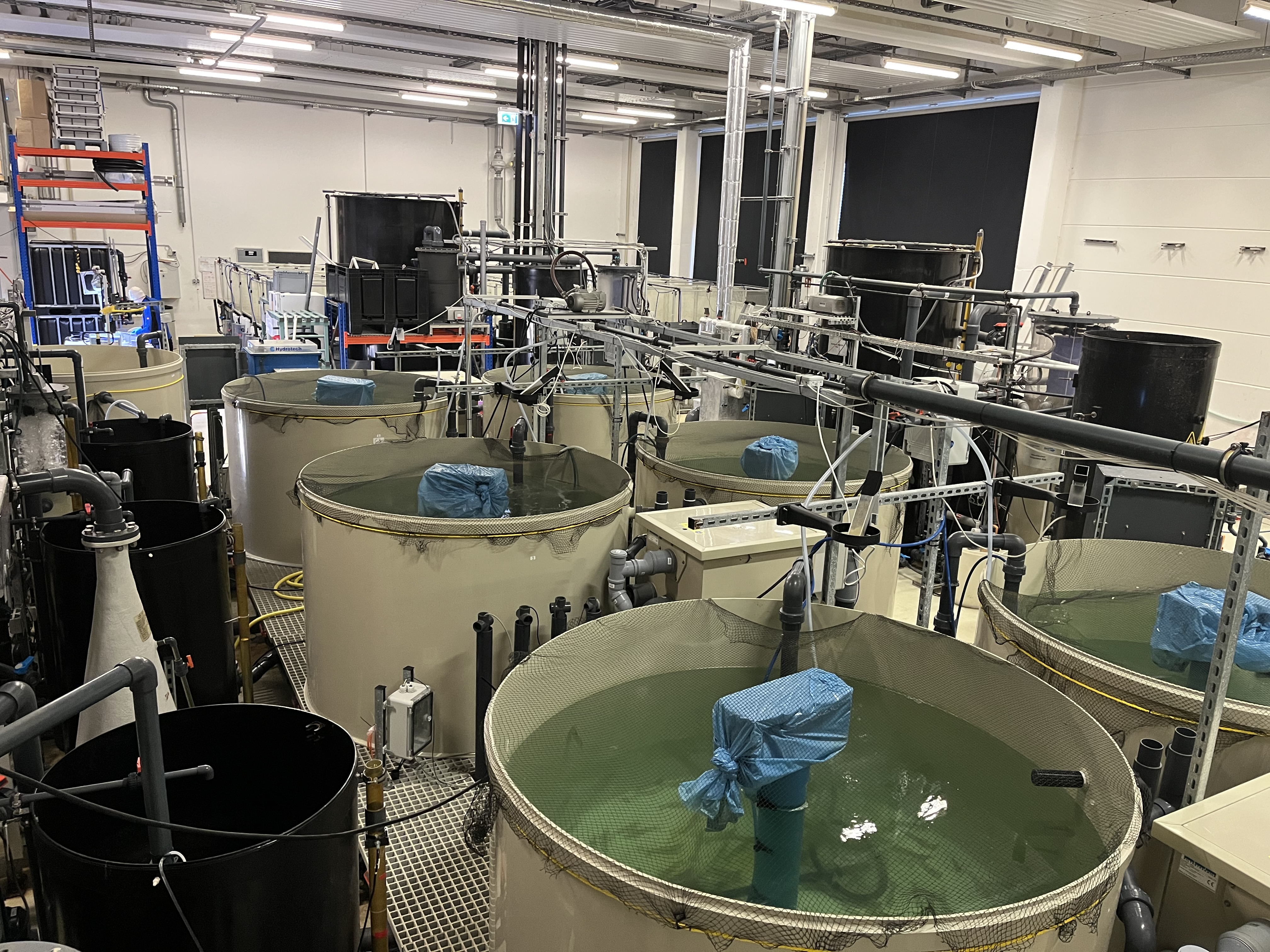
As part of the AquaLoop International Conference in Bremerhaven, participants had the opportunity to visit the aquaculture research facilities of the Alfred Wegener Institute (AWI). The study trip provided valuable insights into state-of-the-art research infrastructure with a strong focus on circular aquaculture technologies.
The AWI facilities comprise highly flexible recirculating aquaculture systems (RAS) designed for freshwater, brackish water, and seawater applications, enabling research on a wide range of species, including fish, crustaceans, and algae. In addition, integrated vertical hydroponic farming systems connected to the aquaculture facilities support advanced research on circular economy concepts and resource-efficient food production.
During a guided tour led by AWI staff, participants learned how the modular and adaptable design of the facilities enables diverse experimental setups and innovative research approaches. The visit highlighted the importance of interdisciplinary research and demonstrated how cutting-edge infrastructure can support the development of sustainable and circular aquaculture systems.
More information about the research Infrastructure of the Aquaculture Research Group can be found here:
Study Trip - ttz Bremerhaven, Germany
Also as part of the AquaLoop International Conference in Bremerhaven, participants visited the Technology Transfer Center (ttz), where they gained insights into the center’s pilot plant facilities and technological capabilities. A particular focus was placed on extrusion technology, which is used for the production of experimental fish feed.
During the tour, the entire production process was presented, including the milling of raw materials, the precise preparation of feed mixtures, various drying techniques, and vacuum coating. In addition, participants explored the wide range of products that can be manufactured using extrusion technology, including snacks, pasta, breakfast cereals, and fish feed. Product samples were displayed to illustrate the versatility of the technology.
The visit also included a presentation of a confocal laser scanning microscope (CLSM), together with selected microscopic images demonstrating its applications in food and feed research. The tour concluded with a visit to the bakery facilities, where the smell of freshly baked bread provided a memorable and enjoyable end to the excursion.