The OptiLeg project investigates how optimized housing and feeding conditions during pullet rearing can sustainably extend the persistence of laying hens. The project integrates aspects of animal welfare, animal health, economics, and ecology across both the rearing and laying phases. To promote early mobility in pullets – and thereby support healthy, longevity laying hens – birds in the groups are given access to the scratching area at two different aviary opening times. In addition, two diets differing in crude fibre and aNDFom content are compared. This design enables an assessment of how aviary opening times and dietary fibre content influence pullet development. Whole-body analyses are also conducted to determine nitrogen (N) and phosphorus (P) retention in the body.
The aim of the OptiLeg project is to sustainably extend the productive lifespan of laying hens through optimized rearing and feeding strategies in pullet rearing, while accounting for animal welfare, health, economic viability, and ecological impact.
Specifically, the study evaluates the effects of:
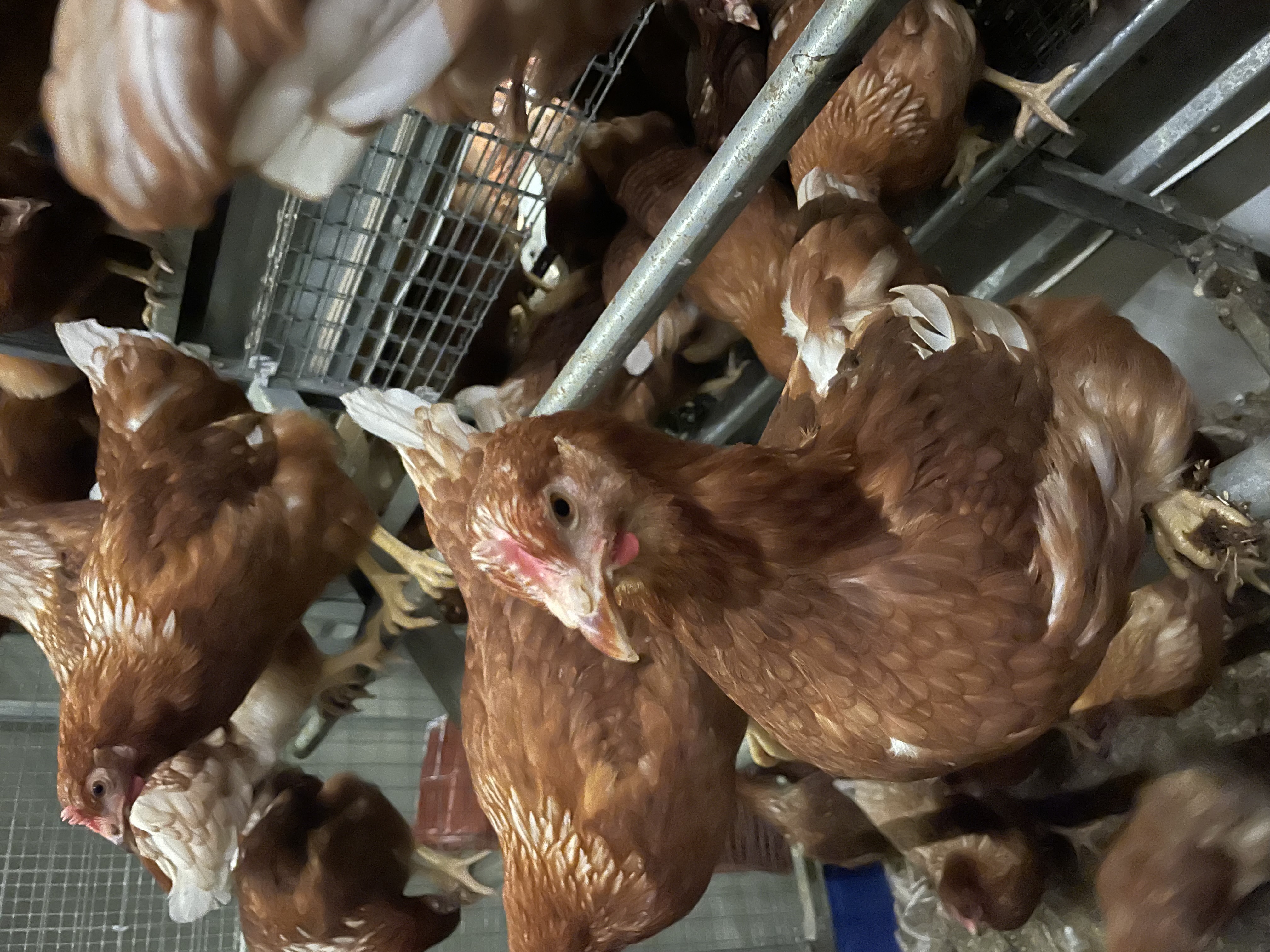
Two feed mixtures differing in crude fibre and aNDFom content
Two aviary opening times during the rearing phase
Whole-body analyses will also be used to assess phosphorus and nitrogen retention in pullets.
The project is organized into five work packages distributed among the partners. Work Package 4 is coordinated by the Chair of Animal Health and Welfare.
Work package 4: N and P retention and bone breaking strength
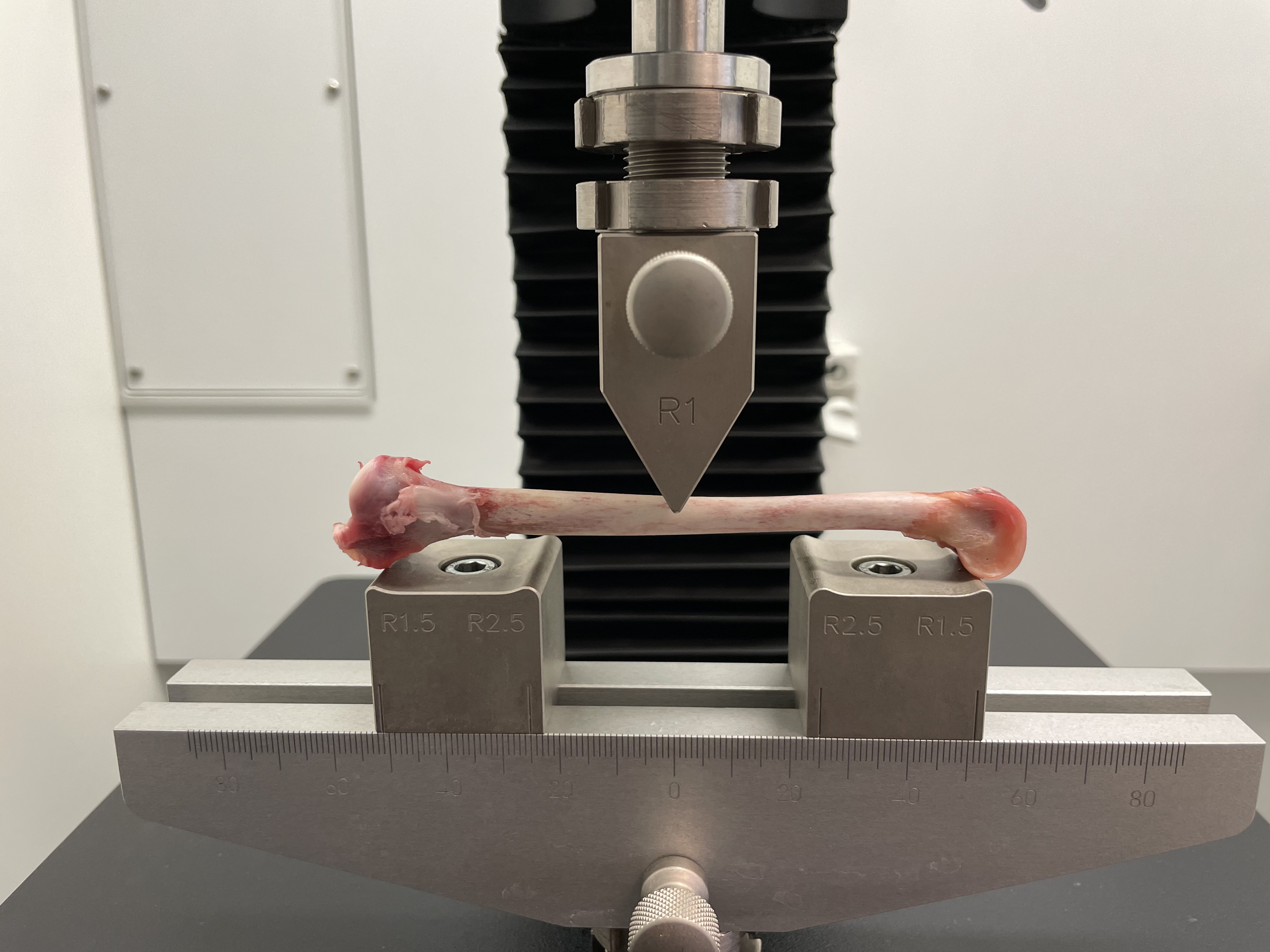
At the end of the rearing phase (AP1), selected pullets undergo whole-body analyses to determine N and P retention. Additional parameters assessed include bone breaking strength, gizzard development, and relative organ masses (small intestine, large intestine, and gizzard). Bone breaking strength provides insight into bone mineralization, which depends both on diet composition and feed intake. A possible interaction with gizzard development can also be assumed here. Moreover, different aviary opening times are anticipated to affect bone breaking strength via changes in activity behavior. To evaluate bone density, indices (Seedor Index and Robusticity Index) are calculated from bone mass and bone length of the tibiotarsus, and X-rays of the bones are taken to examine the influence of aviary opening times on these characteristics. The influence of the dietary fibre content on gizzard development is determined by measuring the thickness of the gizzard wall. In addition, a possible influence of the feed variants on the masses of the small intestine, large intestine and gizzard in relation to live weight is investigated. In addition to the characteristics already mentioned, X-ray examinations of the keel bone of selected animals are carried out at the end of the rearing phase to examine possible effects of different aviary opening times on keel bone changes.