
CRISPR/Cas9-Mediated Genome Editing in Plant Breeding
Background
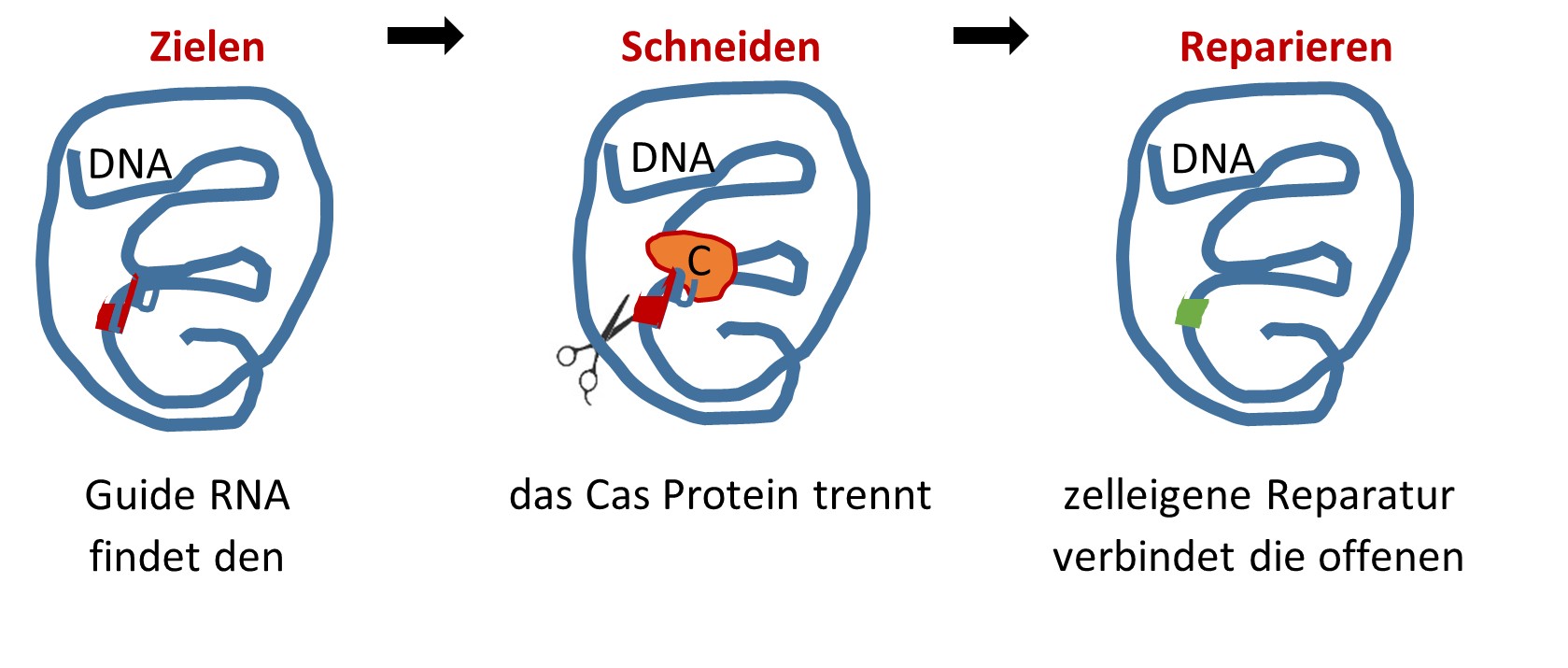
Mutations constitute a fundamental tool in plant breeding to enhance genetic diversity and generate novel traits. Historically, the introduction of mutations into plants was limited to non-targeted approaches, such as physical or chemical mutagenesis. The advent and establishment of CRISPR/Cas9 technology now enable the precise introduction of targeted mutations in virtually any plant species, allowing specific modification of gene sequences. This approach requires detailed genomic information, either at the whole-genome level or for the gene of interest.
In modern research, CRISPR/Cas9 has become an indispensable tool in functional genomics. Targeted gene knockouts facilitate the elucidation of gene function in plant metabolism and development.
In this study, the pea (Pisum sativum L.) was used as a model to demonstrate the targeted inactivation of the raffinose synthase gene. Raffinose synthase is a key enzyme in the biosynthetic pathway leading to raffinose family oligosaccharides (RFOs), including raffinose, stachyose, and verbascose. These soluble carbohydrates are indigestible for humans and other monogastric organisms due to the absence of α-galactosidase activity. Consequently, they undergo anaerobic fermentation by intestinal microbiota, resulting in gas production. This can lead to gastrointestinal discomfort in humans. In animal nutrition, high dietary inclusion levels of peas are associated with reduced feed efficiency, increased moisture content of excreta, and a higher susceptibility to foot diseases. Despite these limitations, peas represent a valuable domestic protein source for both human and animal nutrition due to their high protein content and favorable amino acid composition.
Objectives
- To improve genetic traits in pea and other crop species
- To reduce anti-nutritional factors, specifically raffinose family oligosaccharides, in pea
Results
In the pea cultivar ‘Greenfeast’, targeted mutagenesis of the raffinose synthase gene was successfully achieved using CRISPR/Cas9. As anticipated, mutations were detected 3–4 nucleotides upstream of the protospacer adjacent motif (PAM) sequence. A total of five distinct mutation variants were identified. All primary transformants exhibited heterozygous mutations.
In subsequent generations, Mendelian segregation enabled the selection of lines homozygous for the mutated raffinose synthase allele and devoid of CRISPR/Cas9 transgene sequences. In these homozygous mutant lines, the content of raffinose family oligosaccharides was reduced by approximately 50%.
Project Team
• Dr. Jana Huckauf