
Genetic determinants of biotic and abiotic stress responses in quinoa
Background
Quinoa (Chenopodium quinoa Willd.) is a highly nutritious crop belonging to the Amaranthaceae family, which also includes important crops such as sugar beet and spinach. It is valued for its exceptional nutritional composition, providing a balanced set of essential amino acids, proteins, lipids, dietary fiber, vitamins, and minerals. Because of this unique nutritional profile, quinoa is considered an important crop for global food security.
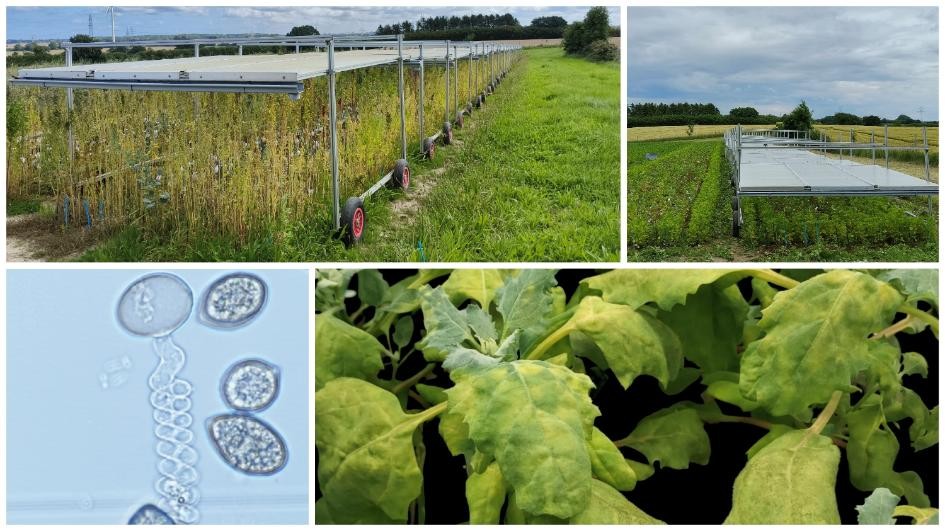
Originally domesticated in the Andean region more than 7,000 years ago, quinoa has adapted to a wide range of environmental conditions, including high altitudes, saline soils, and drought-prone areas. Its tolerance to abiotic stresses such as drought, salinity, frost, and heat makes quinoa a promising crop for sustainable agriculture under changing climatic conditions. However, despite its resilience to abiotic stress, quinoa remains vulnerable to several diseases, particularly downy mildew (Peronospora variabilis), which represents a major constraint for production, especially in temperate regions.
Our research focuses on understanding the interaction between abiotic and biotic stress factors in quinoa. In particular, we investigate the genetic and metabolic mechanisms underlying drought tolerance and resistance to downy mildew. Since environmental stresses can influence plant immune responses and disease susceptibility, uncovering the genetic basis of these interactions is essential.
Using an integrative approach that combines genome-wide association studies (GWAS), transcriptomics, and metabolomics, we aim to identify key genetic loci, metabolic pathways, and molecular regulators involved in stress adaptation. These insights will contribute to the development of improved quinoa varieties with enhanced stress tolerance and stable performance under diverse environmental conditions.
Objectives
- Identification of candidate genes for agronomically important traits by genome-wide association study (GWAS) and QTL mapping in quinoa
- Identification of quinoa accessions with distinct combinations of resistance or susceptibility to downy mildew infection and tolerance or susceptibility to drought stress
- Investigation of the genetic and molecular interactions between biotic (downy mildew) and abiotic (drought) stress factors in quinoa.
- Mapping and characterization of the genetic loci controlling drought tolerance and downy mildew resistance, correlating their haplotype variations with stress responses.
- Optimization and standardization of a high-throughput downy mildew infection assay for efficient resistance screening in quinoa.
- Identification of common stress-response genes and molecular markers shared between quinoa and other species in the PlantsCoChallenge consortium, providing insights into cross-species stress adaptation mechanisms.
Project team
- M.Sc. Swapnil Tale
- Prof. Dr. Nazgol Emrani
Scientific Partners
- Prof. Dr. Christian Jung, Plant Breeding Institute, Kiel University
- Prof. Dr. Karin Schwarz and Dr. Tobias Demetrowitsch; Department of Food Technology, Kiel University
- Prof. Dr. Remco Stam and Dr. Severin Einspanier; Institute of Phytopathology, Kiel University
- Prof. Dr. Jennifer Heiser, Plant Cell Biology, Kiel University
- Prof. Dr. Eric Kemen, Center for Plant Molecular Biology, University of Tübingen
- Prof. Dr. Eva Stukenbrock, Environmental Genomics, Kiel University
- Prof. Dr. Silvio Waschina, Nutriinformatics, Kiel University
Financial Support
Funding for this research has been provided by the Deutsche Forschungsgemeinschaft (German Research Foundation) (DFG), as a part of the PlantsCoChallenge Research Unit 5640, Subproject 2. Project duration: October 2024- September 2028.