
Project Idea
Analyses of the composition and diversity of weed vegetation in Germany have so far been limited to smaller regions or individual crop species. To examine trends in weed diversity for the entire country, a systematic monitoring program would be needed. Such a program still would take several years to produce results. To address this, we are compiling as many existing datasets on weed vegetation in Germany as possible to describe the current status and create a basis for future comparisons. The goals of the data collection vary, ranging from scientific analyses to providing conservation information for farmers.
Data Collection
Data on weed vegetation in Germany is held at various institutions, such as government agencies or research institutions, as well as from hobby botanists and vegetation databases. Currently, our focus is on easily accessible, already digitised datasets. In the future, digitisation or mobilisation from other sources may be possible.
Since spring 2025, datasets have been collected and harmonised. However, as they were originally collected for different purposes, they are heterogeneous in their sampling design, recording methods, and additional information on environmental and management factors.
Data collection is ongoing, and additional datasets can be contributed. See below.
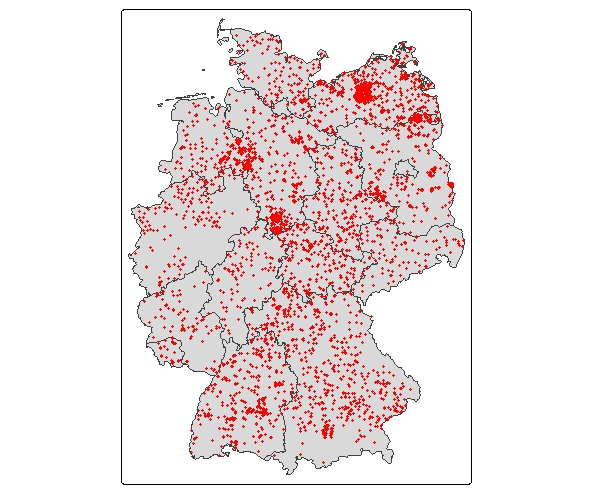
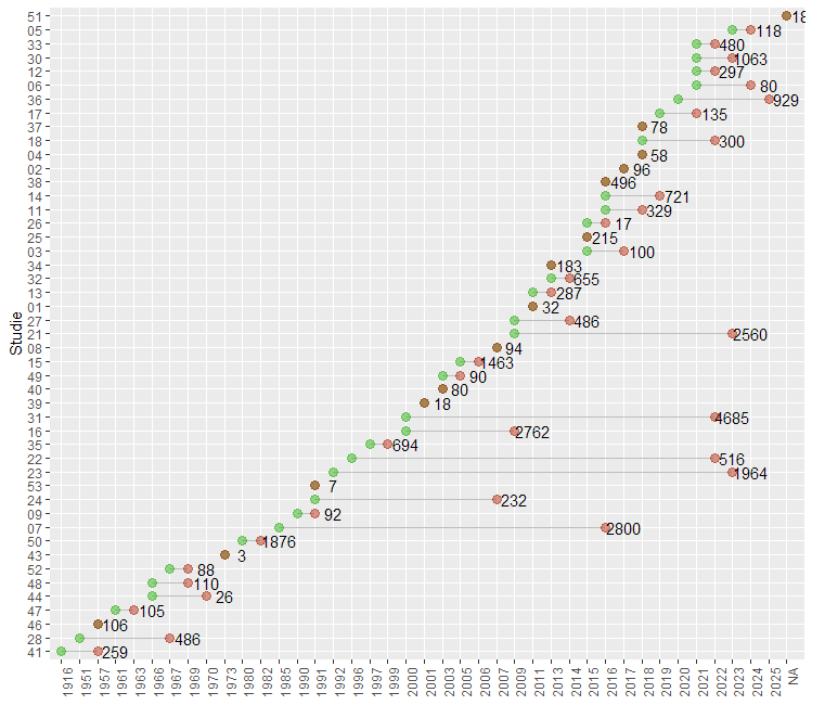
Status of the data collection - this has been achieved so far (November 2025)
We collected
- 47 datasets with classical vegetation records or presence-absence data
- 10 datasets with occurrence data (without complete species lists)
Analysis
Currently the first analyses are prepared:
- Status of weed vegetation 1990–2025
Description of diversity and species composition in different crop types, regions, and under conventional versus organic management. - Time series analysis
Long-term time series from permanent plots are available from five regions across Germany. These allow us to directly analyse changes in diversity and species composition over time.
Further analysis ideas:
• Trend analysis for individual species using Occupancy Models
• Site specificity / regional occurrence of weed species
• Distribution analysis of selected species
• Estimation of floral resource availability (flowering resources)
• Occurrence and trends of rare and threatened species
• Effects of climate change
• Relationship between species occurrence, farming practices, and changes in management
• Retrospective evaluation of the HNV (High Nature Value) methodology
• Development of a future monitoring framework
This list is explicitly open to further suggestions. In particular, it is envisaged that interested parties can take responsibility for a specific analysis and organise and conduct it.
Contribute data
If you would like to contribute data, please read the Data Usage Agreement first. We are collecting both vegetation records (species lists with abundance data) and occurrence data. Data should be georeferenced and include a recording date. We provide a template for data submission, which also includes an overview of the metadata required for your dataset. While data can be submitted in other formats, please ensure that the metadata form is completed at minimum.
Links:
Data Usage Agreement: here
Data template: here
Please send the completed metadata form and your data to jana.buerger@uni-rostock.de A file upload link can be provided for large datasets.
Contacts
For interest or questions, please get in touch with
Dr. Christoph von Redwitz, Julius-Kühn-Institut Braunschweig (christoph.redwitz@julius-kuehn.de, 03946-47 6503) oder
Dr. Jana Bürger, Universität Rostock (jana.buerger@uni-rostock.de, 0381-498 3234)
We welcome interested new partners to join our mailing list and will send out invitations to our online documents and online meetings.